
Bruxism & jaw disorders
Clenched teeth and a tired jaw: the first step is understanding the cause.
Bruxism involves clenching or grinding the teeth, while awake or asleep, sometimes without realising it. It may be accompanied by tooth wear, sensitivity and tired jaw muscles. A dental assessment helps evaluate these signs and establish whether treatment is needed.
Request an assessment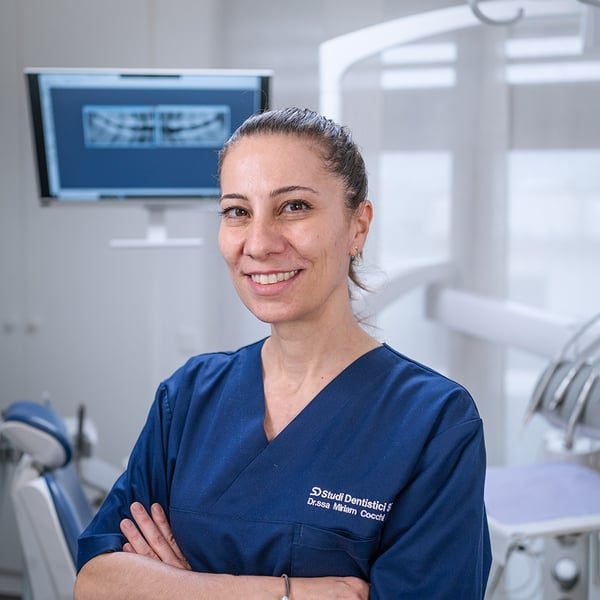
What does a jaw function assessment cover?
The assessment considers jaw function, chewing muscles and the joints that allow the mouth to open and close. Pain, stiffness or restricted movement need to be assessed: bruxism and temporomandibular disorders are distinct conditions. A clicking joint without pain or restricted movement does not necessarily need treatment.
Awake and sleep bruxism: clenching or grinding your teeth
Clenching means pressing the teeth together; grinding means rubbing them against each other. Bruxism can occur while awake or asleep, sometimes without the person realising it. If you notice jaw tension, sensitivity or changes in your teeth, you can discuss them with your dentist. An assessment helps identify which signs need attention.
When to speak to a dentist
- Teeth that look worn or chipped, or feel more sensitive.
- Frequently noticing that you clench your teeth during the day.
- Tired or sore jaw muscles when you wake up.
- Pain when chewing or difficulty opening your mouth.
These signs warrant assessment, without automatically attributing them all to bruxism.
What happens during the appointment?
The consultation covers your symptoms, when they occur, your habits and your sleep. The examination considers your teeth, muscles and jaw movements. Further investigations are considered according to the clinical findings.
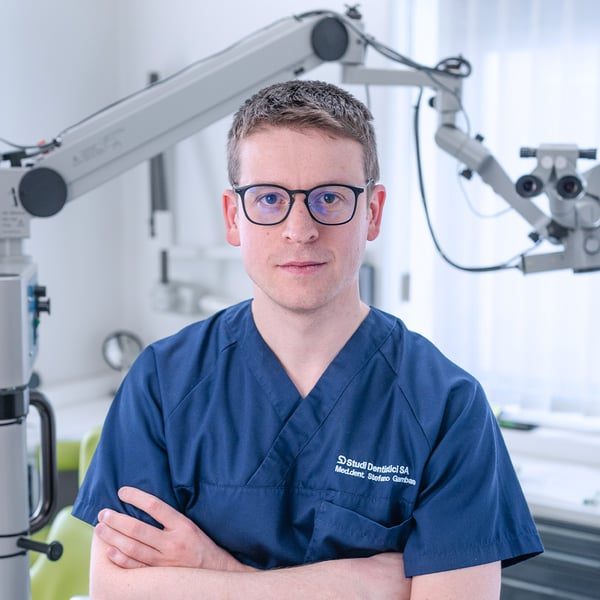
Assessments are provided by Dr Miriam Cocchi in Lugano and Med. dent. Stefano Gambaro in Bellinzona.
A care plan based on the assessment
Advice depends on the symptoms and any damage present. It may include greater awareness of daytime clenching, protecting the teeth and, when needed, involving other healthcare professionals. Not every case requires an appliance.
Frequently asked questions
Worn teeth: is it always bruxism?
Tooth wear can be a sign of grinding, but on its own it does not establish the cause or show whether bruxism is still active. The dentist assesses the appearance of your teeth alongside your history and symptoms. Sensitivity, chips or gradual changes are also worth mentioning.
Pain in the jaw or near the ear: who should I see?
The chewing muscles and jaw joint may be involved, but pain in this area can have other causes. An assessment helps guide further investigations. It is useful to describe when the pain occurs, whether chewing makes it worse and whether you have difficulty opening your mouth or episodes of locking.
Dental splints and night guards: what are they for?
When indicated, a dental splint can protect teeth from wear. Choosing and using the appliance requires an assessment: not everyone needs one, and it is not a guaranteed cure for bruxism. Any benefit for muscle or joint pain needs to be reviewed over time. If an appliance causes pain, stop using it and speak to your dentist.
Stress and bruxism: is there a connection?
Stress can contribute, alongside other factors. Noticing that you clench your teeth during the day is useful information to share at your appointment. The assessment considers habits, symptoms and general health, without automatically attributing every problem to stress.
What if my sleep is not refreshing?
It is helpful to mention this during your appointment. Loud snoring, observed breathing pauses or pronounced daytime sleepiness also warrant a discussion with your doctor. A bruxism splint does not replace assessment for a possible sleep-related breathing disorder.
Request an assessment in Lugano or Bellinzona
Contact the reception team at your chosen practice to arrange an appointment. You can mention whether your request concerns clenched teeth, tooth wear or jaw discomfort.
Clinical sources
Information based on patient resources from NIDCR and the NHS. Consulted on 13 September 2026.